Palermo
ResourcefulnessWhere I learned to speak to anyone and start with what I had.
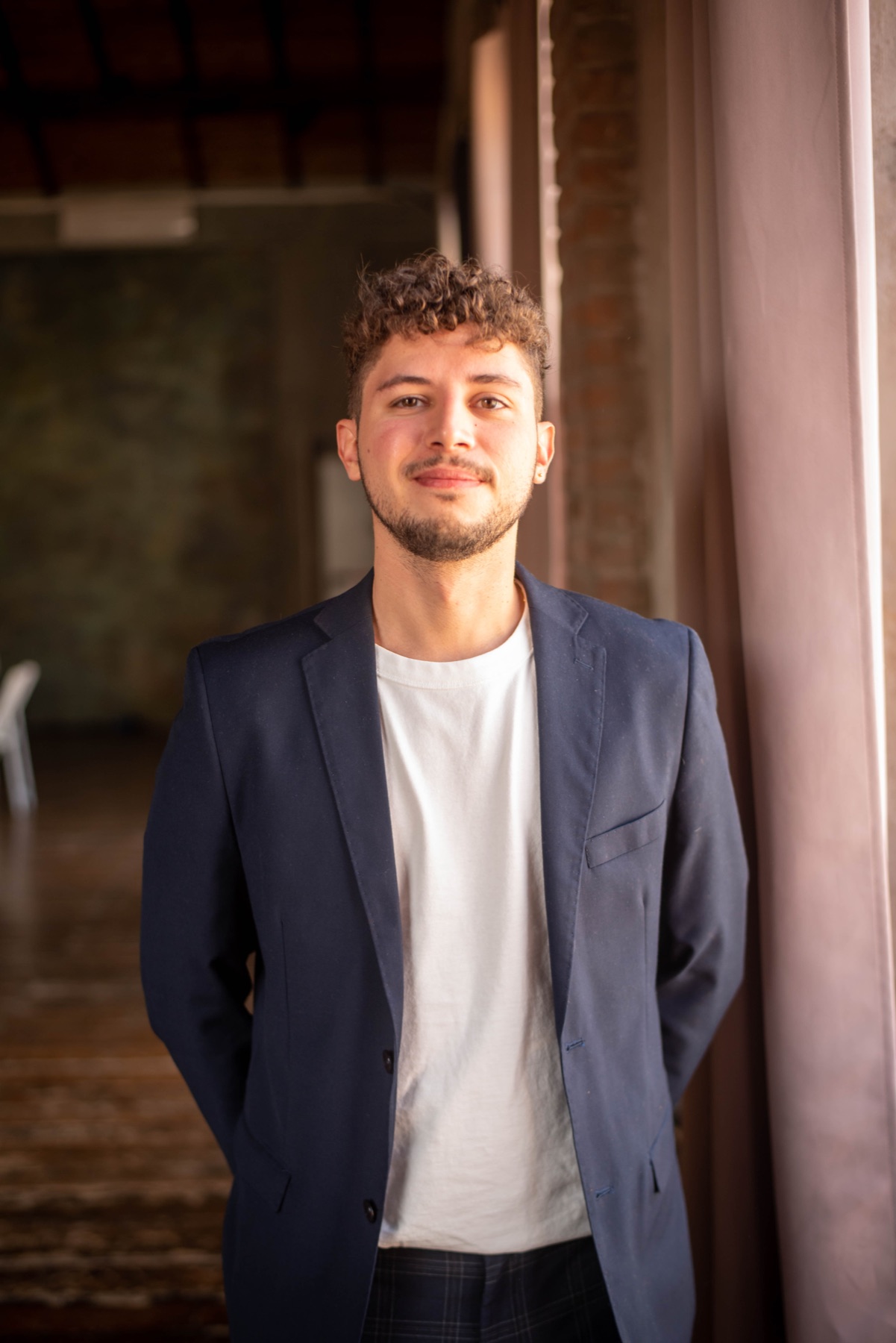
About Gianluca / Gi
I build at the point where an idea still needs strategy, people, product, capital, and enough belief to become real.
THE THREAD / 01
“The most satisfying outcome is not making just anything happen. It is seeing people become more capable of realising what matters to them.”
Entrepreneurship is difficult, but it gives me the freedom to move, choose my time, and design work differently. I want the people around me to have that freedom too. Technology should remove work that drains us, not simply fill the recovered time with more work.
01 Places that shaped the work
Where I learned to speak to anyone and start with what I had.
Where I saw how much potential appears when someone helps an idea out of hiding.
Where I learned startups from the inside, including the cost of ambition and misalignment.
Where culture, technology, health, and the way I want to work finally converged.
02 The longer version
Start before permission
I grew up in Palermo, a city where different cultures, social worlds, beauty, and disorder sit next to each other. It taught me to read people quickly and to make things happen without waiting for perfect conditions.
At thirteen I sold boat trips. At fourteen I worked in holiday villages. At sixteen I entertained children at weddings and birthday parties. At eighteen, two friends and I entered Palermo’s startup competition with our first idea. Someone told me I would never build a startup there because the ecosystem did not exist. So I went looking for one.
Unlock the person, then the idea
Before Berlin, I spent six months managing Polygon Creative Center in Slovenia. The people around me worked remotely for companies such as Google and Dropbox, but many carried ideas they had never given themselves permission to pursue.
I ran small workshops to help them shape side projects and entrepreneurial ideas. That experience stayed with me: people rarely lack creativity. More often, they need a useful question, a structure, and someone beside them while the idea becomes real.
Learn the whole company
I moved to Berlin to study Innovation Management at TU Berlin. Three months later, I paused my studies to co-found Way Network with a highly technical founder. We raised a small pre-seed, built a ten-person team, and shipped an MVP for a decentralized social discovery product in three months.
Way taught me how to recruit belief before there is much evidence. It also taught me that trust and alignment between founders are part of the product. I carried those lessons into BCP Labs, where I built an accelerator and advised ventures, and into Keyko, where I helped scale the team from 7 to 55+ and ran its product incubator.
Put taste to work
I have always felt like a creative person wearing a business jacket, or a businessperson borrowing an artist’s tie. Muro gave both sides a job. I worked with artists, curated exhibitions, sourced screens from China, developed software, raised capital, opened a branch in Qatar, and built relationships across markets.
The platform grew to more than 150 artists and 1,600 displays across four continents before its acquisition by Sedition Art in 2025. Around the same period, the two editions of Rare Effect connected Lisbon, a virtual world, and 95 international artists, while my work with RnA Studio continued the exploration of art, neuroscience, and technology through exhibitions and immersive experiences.
Choose the work deliberately
I moved to Qatar to sell Muro, established the company locally, and spent ten months building a network one meeting at a time. The opportunity was real, but so was the commitment: doing it properly could require three years focused on one market and one company.
I realised that I love creating ventures more than endlessly optimising one. I can support scale and have done it, but my best energy belongs to the zero-to-one: seeing the opening, assembling the pieces, and getting the system to move.
What I am building now
Digital Kitchen is the synthesis. I run it with Christian Vismara, a co-founder I trust deeply. I lead venture direction, strategy, positioning, and the business around the product. Christian leads engineering.
Over the next decade, I want the studio to become a venture builder and eventually an investment platform: a place where people can bring ideas, find the right collaborators, build quickly, and retain more freedom in how they work and live.
Art remains part of that future. I want to keep backing artists, creating exhibitions, and placing technology in their hands so they can invent new media and emotional experiences.
Visit Digital Kitchen03 The short version
MSc in Innovation Management from TU Berlin. BBA from Palermo, summa cum laude. Guest lecturer. Four ventures founded, roughly €3.5M raised across early-stage companies, and one exit. Italian, based in Lisbon. Brown belt in kickboxing.
Work with me
I work with founders and organisations as an advisor, innovation partner, or venture builder.
Discuss a venture